Ensure resilient livelihoods for all to withstand economic shocks
Contextually appropriate solutions to generate sustainable livelihoods for the marginalized section of the society
OVERVIEW
In order to address poverty and hunger, as well as complement the National Livelihood Mission - a Government of India initiative aimed at achieving UN SDG 1 and 2 - we need to identify and address the root causes underlying these issues. This requires a focus on creating economic opportunities, providing quality education, offering job training and access to resources, and establishing social safety nets for those in need. By promoting sustainable livelihoods, we can empower individuals to become self-reliant and equipped with the necessary skills and resources to make decisions that will benefit their communities. Our approach involves conceptualizing customized livelihood-generation programs tailored to their specific needs.
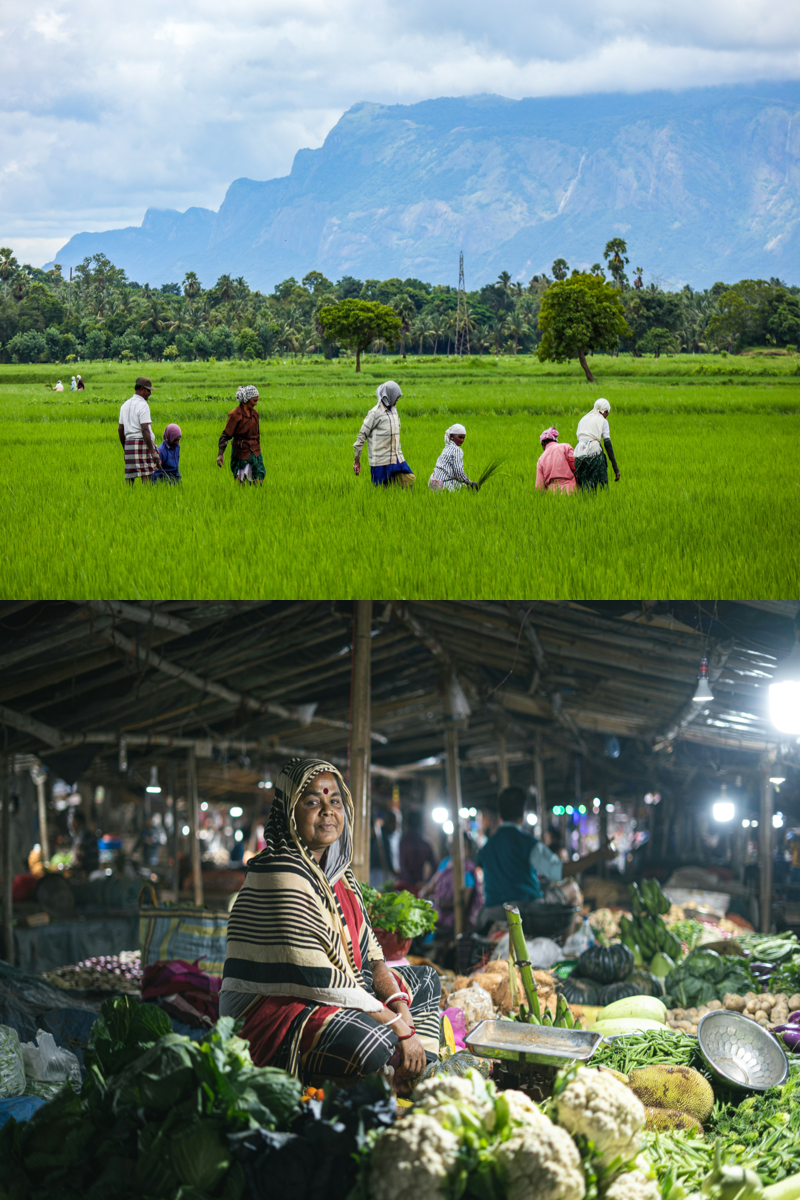
We follow the Graduation Approach which is an innovative, holistic and proven approach to addressing poverty and reducing inequality. We target families living in extreme poverty, families who live on less than $1.25 (INR less than Rs. 100) a day. They are often marginalized within their communities, have no asset base or alternative sources of income, are highly vulnerable to shocks, are deserted by husbands, lacking access to govt services and our contextually customized program that could help them.
Combining targeted social assistance with technical and life skills training, financial inclusion, and coaching and mentoring, the comprehensive set of sequenced interventions throughout the program intervention to address the many challenges of poverty simultaneously, boosted livelihoods, income, and health among the target group.
“Graduation” is always context-specific and implies reaching a situation where a household has an economically viable livelihood, is food secure, and is connected to essential services.
Low carbon farming is central to long-term livelihood resilience. SM-PACT integrates carbon-sensitive practices—composting, agroforestry, cover crops and low-till methods—that reduce greenhouse gas emissions, improve soil health and lower input costs for small and marginal farmers.
What we do:
• Turn natural waste into enriched compost to replace synthetic fertilisers.
• Train farmer groups in regenerative practices (agroforestry, cover cropping, mixed cropping).
• Establish composting micro-enterprises and link low carbon produce to markets and digital advisory services.
Why it matters:
Low carbon farming mitigates climate risk while increasing soil fertility, reducing input expenditure, and strengthening food and income security for rural households.
Our approach to ensure sustainable livelihood


We specialize in sustainable livelihoods and poverty reduction in India, offering tailored programs such as Graduation Approach for ultra-poor, waste-to-wealth training for women, and low cost organic farming for small farmers. Our approach empowers individuals and addresses multiple challenges of poverty through training, social assistance, and financial inclusion.

SM-PACT India Foundation's related programs strive to improve the lives of marginalized individuals, particularly women and children, by achieving SDG targets and creating positive social impact.